China Top Coal Mine Special Hose Manufacturer?
Selecting a China-based Coal Mine Special Hose manufacturer requires more than comparing prices. Underground mining exposes hoses to abrasion, hydraulic pressure, water, mud, vibration, and sharp steel edges. A reliable supplier should understand these conditions from actual production experience.
Joe Main, former U.S. Assistant Secretary for Mine Safety and Health, said, “Safety and health are not choices; they are responsibilities.” This principle fits hose selection closely. A hose failure can stop a longwall system, damage equipment, or create serious workplace hazards. Small details matter.
Look for reinforced construction, stable pressure ratings, flame-resistant covers, anti-static performance, and dependable coupling systems. Ask whether the manufacturer controls rubber mixing, reinforcement braiding, curing, and final testing internally. Factory photographs help, but test records matter more.
Request evidence of relevant certifications and traceable inspection reports. Check temperature ranges, bending radius, impulse performance, and abrasion resistance. Confirm whether the hose matches the fluid, pressure, and mining equipment used at your site.
A strong manufacturer should also support sample testing, technical selection, and after-sales replacement planning. Fast communication is useful underground. Clear documentation is better.
No supplier is perfect. Even a qualified hose can fail when installation is careless or inspection is ignored. That point deserves reflection.
The best China Coal Mine Special Hose manufacturer is not simply the cheapest exporter. It is a technically capable partner that delivers consistent quality, honest specifications, and practical support for demanding coal mine environments.
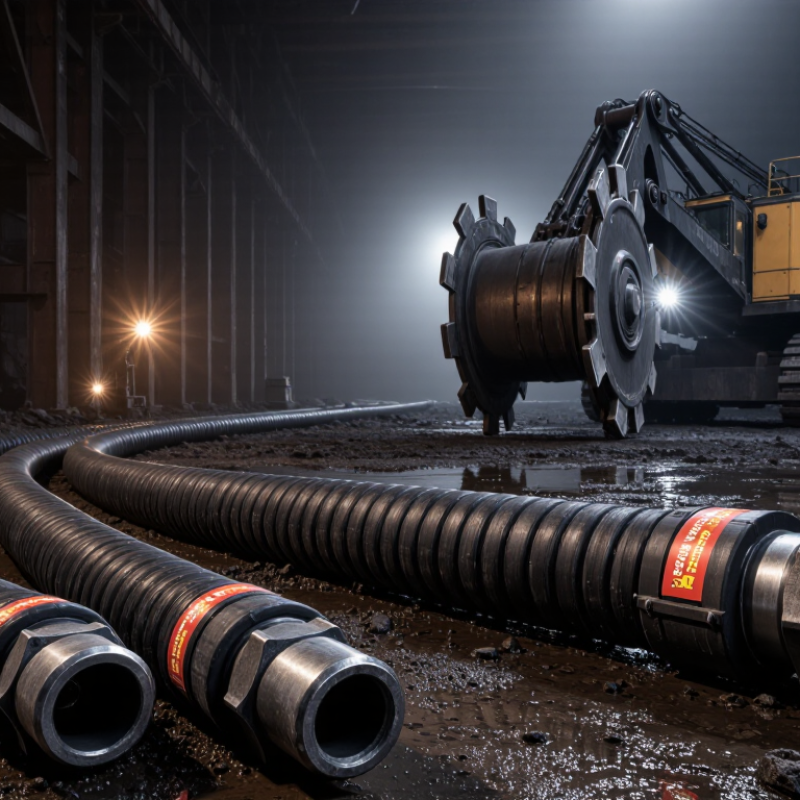
A specialized coal-mining hose is not simply a thicker industrial hose. It must survive pressure surges, abrasive dust, water, oil, vibration, and confined installation spaces. The IEA Coal 2024 report estimated global coal demand at about 8.7 billion tonnes in 2024. That scale makes hose reliability an operational requirement, not a purchasing detail.
For underground hydraulic systems, buyers should check working pressure, burst pressure, bend radius, abrasion resistance, flame behavior, and coupling security. ISO 6805:2020 addresses rubber hoses and hose assemblies for underground coal-mining hydraulic systems. Its requirements help control failures near powered equipment. In practice, a hose may pass a factory pressure test yet suffer early damage from dragging, sharp edges, or incorrect routing. This is where inspection experience matters.
A dependable manufacturer should provide traceable test records, batch identification, material specifications, and clear replacement guidance. The U.S. Mine Safety and Health Administration continues to identify machinery, maintenance, and ground-related hazards among serious mine-safety concerns. Hose selection cannot remove every hazard, but it can reduce avoidable failures. Operators should inspect covers for cuts, exposed reinforcement, flattening, leaks, and coupling movement before each shift. That routine is simple. It is also often neglected. Cost, delivery speed, and customization matter, but they should follow verified performance evidence.
China Top Coal Mine Special Hose Manufacturer?
China has become a leading coal mine hose manufacturing base because demand, materials, and engineering capacity meet in one market. The International Energy Agency’s Coal 2024 report estimated global coal demand at about 8.77 billion tonnes in 2024. China represented more than half of global consumption. China’s National Bureau of Statistics also reported approximately 4.76 billion tonnes of raw coal output in 2024. This scale creates continuous demand for hydraulic, slurry, water-spray, and air hoses.
Manufacturers benefit from dense supply chains for synthetic rubber, reinforcement wire, fittings, and testing equipment. Practical hose selection focuses on abrasion resistance, pressure stability, flame resistance, and bend performance. A hose near a conveyor may face coal dust, sharp edges, vibration, and repeated flexing. Small design details matter. Correct crimping matters too. Production can include pressure testing, impulse testing, dimensional checks, and compound verification against applicable ISO and Chinese requirements.
However, production scale does not guarantee field reliability. Some published market estimates combine industrial and mining hoses, making direct comparisons imperfect. That limitation deserves attention. Reliable suppliers should provide traceable batch records, test results, working-pressure ratings, and clear temperature limits. Engineers should also inspect coupling security and outer-cover wear during service. A low purchase price may hide short replacement cycles. China remains competitive, but quality control separates a durable mining hose from an ordinary rubber tube.
| Evaluation Dimension | Verified Data or Typical Requirement | Why It Matters for Coal Mines | Reference or Technical Basis |
|---|---|---|---|
| Domestic coal-market scale | China produced approximately 4.76 billion tonnes of raw coal in 2024. | A large operating coal sector creates sustained demand for hydraulic, water-transfer, slurry, air, and material-handling hoses. | National Bureau of Statistics of China, 2024 national economic data. |
| Hydraulic power systems | High-pressure wire-reinforced hoses are commonly used for powered roof supports, hydraulic mining equipment, and mobile machinery. | These hoses must withstand pressure pulses, abrasion, restricted bend radii, and continuous mechanical movement. | ISO 18752 and applicable hydraulic-hose product specifications. |
| Typical hydraulic pressure classes | Common industrial hose assemblies are selected for working pressures ranging from approximately 70 bar to more than 400 bar, depending on construction, size, and application. | Correct pressure selection reduces burst risk and improves service life under load cycles. | The exact rating must be confirmed from the hose assembly’s test certificate and product specification. |
| Nominal bore range | Coal-mine hose assemblies are commonly supplied in nominal sizes from about DN6 to DN100, with larger sizes used for water, slurry, and ventilation-related services. | Bore size affects flow rate, pressure loss, equipment compatibility, and hose flexibility. | ISO 4413 hydraulic-system principles and standard hose-size conventions. |
| Reinforcement construction | Typical constructions include one or more layers of high-tensile steel wire braid or spiral reinforcement; textile reinforcement is used for selected lower-pressure services. | Reinforcement provides resistance to internal pressure, impulse loading, and external mechanical stress. | ISO 18752, EN 853, EN 856, and application-specific specifications. |
| Flame resistance | Hose covers for underground mining may require flame-resistant performance verified through the relevant mining-safety approval or test method. | Flame-resistant materials help limit fire propagation in confined underground environments. | The required test depends on the destination market and mine-safety authority. |
| Electrical conductivity | Anti-static or electrically conductive hose designs may be required in hazardous mining areas; resistance limits must be verified by test documentation. | Controlled electrical resistance helps reduce the possibility of static-charge accumulation. | Applicable mining regulations and the destination market’s hose-safety requirements. |
| Abrasion resistance | Heavy-duty covers are selected for contact with rock, coal, steel structures, conveyor equipment, and mine-floor surfaces. | Improved cover durability reduces premature leakage and replacement caused by rubbing and impact. | Abrasion performance should be checked against the manufacturer’s test method and specified service conditions. |
| Temperature capability | Many rubber hydraulic hoses are designed for approximately −40°C to +100°C, while some fluids and hose constructions require narrower or different limits. | Temperature affects rubber aging, pressure capacity, flexibility, and fluid compatibility. | Always use the temperature range stated for the specific hose, fluid, and assembly. |
| Fluid compatibility | Tube materials are selected according to the medium, including mineral hydraulic oil, water-based fire-resistant fluid, water, air, slurry, or chemicals. | Incorrect elastomer selection can cause swelling, hardening, permeability, leakage, or premature failure. | Compatibility must be confirmed using the fluid manufacturer’s data and the hose supplier’s chemical-resistance chart. |
| Assembly quality control | Key controls include dimensional inspection, crimp-diameter verification, proof-pressure testing, cleanliness control, and traceability of hose and fittings. | Assembly quality is as important as hose-tube performance because fitting installation is a frequent failure point. | ISO 17165-2 provides recommended practices for hydraulic hose assembly installation and maintenance. |
| Manufacturing ecosystem | China has established supply chains for synthetic rubber, steel wire, textile reinforcement, fittings, machinery, testing equipment, and industrial logistics. | Integrated sourcing supports varied specifications, competitive lead times, and customized hose assemblies. | Assessment should be based on documented material traceability, test reports, and production capability rather than price alone. |
| Export and customization capability | Manufacturers commonly support metric and inch dimensions, custom lengths, different end connections, protective sleeves, and destination-market documentation. | Flexible configuration helps match different mining machines, hydraulic systems, and regulatory requirements. | The purchase specification should define dimensions, pressure, fluid, temperature, bend radius, fittings, and required approvals. |
Coal mining operations demand hoses that tolerate abrasion, pressure, vibration, and sudden temperature changes. In practical mine inspections, hose damage often begins near couplings, bends, or poorly supported sections. A reliable coal mine special hose manufacturer should consider fluid type, working pressure, length, and installation conditions before recommending a product.
Their inner tubes need strong abrasion resistance when water carries sand or coal particles. Slurry hoses handle denser mixtures and usually require thicker wear layers. Hydraulic hoses power roof supports, cutting equipment, and loaders. They must resist pressure surges and repeated flexing. Small cracks matter.
They need flexible construction, secure fittings, and resistance to oil exposure. Shotcrete hoses carry cement mixtures during roof reinforcement. Their smooth internal design can reduce material buildup, but sharp bends still create blockages. Electrical cable hoses or protective sleeves help shield lines from impact and movement.
In my experience, operators sometimes focus only on burst pressure and overlook bending radius. That decision can shorten service life. No hose choice is perfect. Dust, heat, dragging, and careless storage may still cause early failure. Experienced suppliers should explain these weaknesses honestly and provide practical installation guidance.
Coal mine hoses must survive more than high pressure. They face sharp rock, coal dust, water, oil, vibration, and repeated bending. A reliable hose begins with the correct material. The inner tube should resist the transported medium, while steel wire or textile reinforcement controls pressure. The outer cover needs abrasion, ozone, weather, and flame resistance. In wet galleries, poor cover selection can cause early cracking.
Manufacturing technology matters just as much. Modern production uses controlled rubber mixing, accurate extrusion, and even reinforcement placement. Each hose should undergo dimensional checks, pressure testing, impulse testing, and burst testing. Conductivity testing is also important where static electricity may create a hazard. End fittings require careful crimping. Small errors can become serious failures underground.
Safety standards must guide every design decision. Suppliers should provide traceable materials, batch records, test reports, and clear working-pressure limits. Products may need to meet applicable ISO, EN, national, or mine-site requirements, depending on their purpose and location. Flame resistance alone is not enough. Installation, bend radius, coupling quality, inspection, and replacement schedules also affect safety. No hose is perfect. A common weakness is overconfidence in laboratory results. Field conditions are harsher, so manufacturers should study wear patterns and revise designs after real inspections.
Coal operations demand more than a low quotation. The IEA Coal 2023 report recorded global coal demand above 8 billion tonnes in 2022. That scale increases pressure on hydraulic, water, and slurry hose systems. A dependable Chinese manufacturer should show documented experience in mining applications, not only general rubber production. Ask for factory audit records, production capacity, export history, and traceable batch numbers.
Technical verification matters. ISO 6805:2020 specifies requirements for wire-reinforced hydraulic hoses used in underground coal mining. Check whether the supplier tests working pressure, burst pressure, abrasion, flame resistance, and impulse performance. Request current laboratory reports, material certificates, and inspection records. A serious factory should identify the rubber compound, reinforcement layers, hose diameter, temperature range, and coupling method clearly. Vague answers are warning signs.
Before signing, inspect sample hoses under realistic conditions. Bend them around the planned radius. Examine cover cracking, coupling movement, and identification markings. Request a small trial order with agreed acceptance criteria. Some suppliers provide impressive certificates but weak consistency between batches; this is an easy point to overlook. I have seen specifications copied accurately while actual tolerances remained unclear. Therefore, confirm measurements with an independent inspection agency when the hose is safety-critical. Delivery reliability also deserves attention: verify lead times, packaging, spare fittings, complaint handling, and after-sales response in writing.
Large mining demand supports continuous production. Dense supply chains provide rubber, steel wire, fittings, and testing equipment. Engineering experience also supports specialized designs.
Common types include hydraulic, slurry, water-spray, and air hoses. Each hose must match its pressure, medium, temperature, and working environment.
Coal dust, sharp rock, oil, water, vibration, and repeated bending can cause damage. Conveyor areas may also expose hoses to edges and constant movement.
The inner tube should resist the transported medium. Steel wire or textile layers control pressure. The outer cover needs abrasion, weather, ozone, and flame resistance.
Useful tests include pressure, impulse, burst, dimensional, conductivity, and compound checks. Test reports should identify the batch and stated working pressure.
No. Coupling security, bend radius, conductivity, installation, and inspection also matter. A flame-resistant hose can still fail after poor crimping.
Ask for traceable material records, batch details, test results, temperature limits, and pressure ratings. Inspect the actual fitting and cover condition, not only documents.
A lower price may hide short replacement cycles. Repeated failures create downtime and labor costs. Cheap is not always economical.
No. Underground conditions are harsher than controlled tests. Wear patterns should be inspected in service. This is often overlooked.
A Coal Mine Special Hose is engineered to withstand the demanding conditions of underground and surface mining. Unlike ordinary industrial hoses, it must provide strong resistance to abrasion, impact, pressure, chemicals, oil, flame, and harsh weather while remaining flexible and easy to handle. Common applications include hydraulic hoses, water delivery hoses, slurry hoses, air hoses, and material-handling hoses used in drilling, transportation, dust suppression, and equipment systems. Their performance depends on suitable rubber or thermoplastic materials, reinforced textile or steel layers, secure connections, and manufacturing processes that support consistent quality and safe operation.
China has become a major manufacturing base because of its mature industrial supply chain, broad material resources, skilled production capabilities, and ability to provide customized solutions. When selecting a reliable Chinese manufacturer, buyers should evaluate product specifications, pressure and temperature ratings, reinforcement structure, testing procedures, quality control, certifications, production capacity, delivery reliability, and after-sales support. Clear technical communication and sample testing can also help ensure the hose matches the mine’s equipment and working conditions.

Kelong New Materials