Choosing the best High Flexibility Hose in 2026 takes more than checking a product label. The right hose must bend smoothly, fit the working pressure, and tolerate the fluid, temperature, and movement it will actually face. A hose that kinks beside a pump or rubs against a sharp frame can fail long before its stated service life. Small details matter.
Market context helps explain the growing attention to hose selection. MarketsandMarkets’ Industrial Hose Market report projected the global market would reach US$13.2 billion by 2027, up from US$10.7 billion in 2022. That forecast signals expanding demand, but it does not tell buyers which hose suits a specific installation. For that, compare manufacturer data sheets and verify bend radius, pressure ratings, reinforcement, fittings, and compatibility with the conveyed medium. Do not rely on flexibility claims alone.
One point deserves care: without a verifiable source, an expert’s words should not be presented as a genuine quotation. So this guide does not invent one. Instead, it treats flexibility as a measurable design requirement—not a marketing phrase. A useful selection starts with the route the hose must follow, the tightest bend it will encounter, and how often it will move. Then check the limits. In practice, a little extra clearance can prevent repeated rubbing, though it cannot compensate for an undersized or incompatible hose.
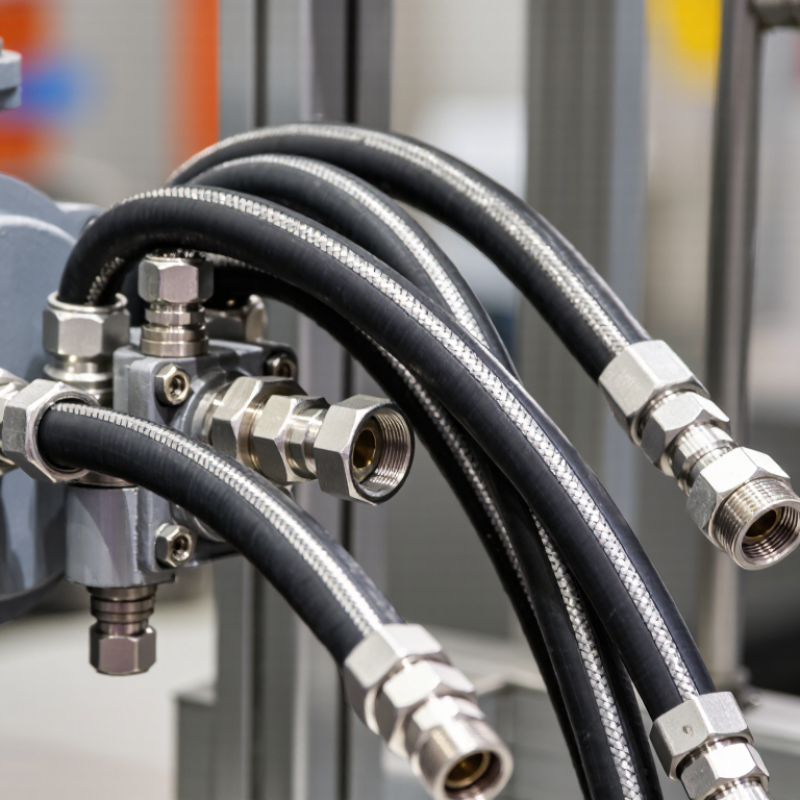
A high-flexibility hose is built to bend repeatedly without kinking, cracking, or losing flow. It usually combines a flexible inner tube, reinforcement layers, and an outer cover. The tube carries the fluid or air. Braided wire, textile, or spiral reinforcement helps it withstand pressure and movement. The cover shields the assembly from abrasion, moisture, and temperature changes.
When a machine moves, the hose absorbs some of that motion instead of forcing rigid pipes to take the strain. Picture a hose curving beside a vibrating pump: its bend radius, pressure rating, and material compatibility all affect how reliably it works. “Flexible” does not mean bend it any way you like. A tight loop can restrict flow or damage reinforcement, even if the hose looks intact.
In practice, match the hose to the fluid, operating pressure, temperature, and movement frequency. Check its minimum bend radius and inspect for bulges, surface wear, or leaks. Small details matter. A hose that fits during installation may still rub against a frame after the equipment starts moving. That possibility is easy to overlook.
How to Choose the Best High Flexibility Hose in 2026?
Which Materials and Construction Features Determine Hose Flexibility?
Choosing a flexible hose starts with the material, not the color or surface texture. Thermoplastic polyurethane offers strong abrasion resistance and repeated bending. Silicone stays soft across wide temperature ranges, but it may perform poorly with certain oils. EPDM handles hot water and weather exposure well, yet it is not suitable for every fluid. Material compatibility must match the actual media, temperature, and pressure.
Construction changes flexibility just as much. A thin wall bends easily, but it may collapse under vacuum or pressure. Textile reinforcement improves pressure capacity while keeping the hose relatively light. Wire reinforcement resists crushing and kinking, although it usually increases stiffness. Corrugated walls bend sharply and suit tight routing. Their inner surface can create more turbulence and may be harder to clean.
In practical testing, measure the hose at its working temperature. Cold material often feels much stiffer. Check the minimum bend radius during movement, not only during installation. Repeated bending can expose weak fittings or poor reinforcement. I have seen hoses pass a static inspection and fail after constant machine motion. That result is easy to underestimate. A flexible hose is not automatically durable. Review cycle frequency, bend direction, vibration, and fitting strain before selecting the final construction. Small details matter.
| Hose Material or Type | Construction Features That Affect Flexibility | Relative Flexibility | Typical Strengths | Key Selection Considerations |
|---|---|---|---|---|
| Flexible PVC | Plasticized PVC wall; a thinner wall and soft formulation generally improve bendability. Helical reinforcement may help resist collapse but can reduce flexibility. | High in soft, unreinforced designs; varies with formulation and reinforcement. | Lightweight, economical, and available in clear or colored versions. | Check chemical compatibility, temperature limits, pressure rating, and whether the hose must resist kinking or vacuum. |
| Polyurethane (PU) | Extruded wall with optional textile or spiral reinforcement; wall thickness and reinforcement pattern influence bend radius. | High in many lightweight designs. | Often selected for abrasion resistance and repeated handling, including some material-transfer applications. | Confirm compatibility with the conveyed material and verify pressure, temperature, and abrasion requirements for the specific construction. |
| Rubber (such as EPDM or NBR compounds) | Elastomer tube with textile braid, spiral textile, or wire reinforcement. More reinforcement layers usually increase strength but can make the hose stiffer. | Moderate to high, depending on compound, wall thickness, and reinforcement. | Can provide good resilience and suit demanding service when the compound is matched to the fluid and environment. | EPDM and NBR have different compatibility profiles; select by fluid, temperature, pressure, and exposure conditions. |
| Silicone | Soft silicone tube, sometimes supported by textile or wire reinforcement; reinforced designs generally have greater pressure capability and less free bending. | High for unreinforced tubing; lower for heavily reinforced assemblies. | Retains flexibility across a broad temperature range in many product designs. | Check the exact grade, pressure rating, permeation requirements, and suitability for the application, including food or medical use where relevant. |
| Convoluted PTFE | Corrugated inner tube creates flexibility; external braid, commonly stainless steel, supports pressure and protects the liner. | High for a fluoropolymer hose, though corrugation shape and braid affect bend behavior. | Offers broad chemical resistance in many applications and can be supplied with a protective braid. | Check the manufacturer’s minimum bend radius, pressure derating, temperature limits, and compatibility with the specific fluid. |
| Corrugated stainless steel | Formed metal convolutions provide bending movement; braid may be added for pressure containment and protection. | Flexible for a metal hose, but not as soft or lightweight as many polymer hoses. | Can be used where metal construction, temperature capability, or specific process requirements are important. | Evaluate fatigue life, vibration, movement type, pressure, temperature, and the need for external braid or a protective cover. |
Flexibility is determined by the complete hose assembly—not material alone. Compare the manufacturer’s minimum bend radius, pressure rating, temperature range, reinforcement, and intended movement conditions for the exact hose size and construction.
How to Match Hose Flexibility With Pressure, Temperature, and Media
A hose that bends easily can still fail under pressure. Start with the system’s working pressure, then check surge pressure and pressure cycles. ISO 18752 classifies hydraulic hoses by pressure performance and impulse-test requirements; its classes are not interchangeable. Match the hose’s stated rating to the actual duty, including pressure spikes. Leave room for movement. A tight bend can flatten the bore and restrict flow, even when the hose feels supple.
Temperature changes the decision. Check both the fluid temperature and the surrounding air, especially near engines, ovens, or cold outdoor lines. ISO 6803 describes hydraulic hose impulse testing, but a test result does not replace the hose maker’s temperature and pressure limits. Ratings can change across temperature ranges. Use the specified derating data, not a guess. I have seen a hose routed neatly beside a hot pipe; it looked fine, until the cover hardened.
Media compatibility matters just as much. Verify the liner against the exact fluid, concentration, and cleaning chemicals. A material suitable for oil may swell or weaken with another fluid. Compare the hose’s minimum bend radius with the installation path, then inspect for kinks, rubbing, and torsion. Keep a little slack. It helps, though too much slack can create snag points. Record the pressure, temperature, fluid, and bend radius before ordering; those details make a supplier’s recommendation more reliable.
How to Choose the Best High Flexibility Hose in 2026?
Bend radius is a working limit, not a suggestion. Check the manufacturer’s minimum radius for both static and moving applications. A hose that bends safely while installed may kink when a machine cycles. Leave room for movement, and avoid twisting the hose to make a fitting line up. Even a small kink near a connector can restrict flow or shorten service life. Tight spaces make this easy to overlook.
Length needs more than a tape measure. Measure the full route, including movement, fitting depth, and a little slack for vibration. Too short can pull on connections; too long can rub against frames or form sharp loops. There is no perfect allowance for every layout. Recheck the route at both ends of the equipment’s travel.
Connection standards deserve equal care. Confirm thread type, size, gender, sealing method, and pressure rating; similar-looking threads may not seal together. For example, NPT and BSP threads are not interchangeable just because their diameters seem close. Check flange dimensions or quick-connect profiles against the mating component’s specification. Also verify fluid compatibility and operating temperature. A detail can be missed. Record the hose’s pressure, temperature, and bend-radius limits before ordering, then compare them with the actual installation conditions.
Bend-radius planning examples for a hose with a 25 mm inside diameter
The chart converts example bend-radius ratios into dimensions: radius = ratio × hose inside diameter. These are planning examples, not universal hose limits. Check the selected hose’s datasheet for its minimum static and dynamic bend radius, and never bend it tighter than specified. Measure the installed length along the actual route, allowing for movement and avoiding tension or kinks. Confirm that end connections match the required thread, flange, or other connection standard; standards such as ISO 8434 and ISO 6162 cover specific hydraulic connection types.
How to Choose the Best High Flexibility Hose in 2026?
How to Compare Safety, Durability, Maintenance, and Total Cost in 2026?
A high-flexibility hose should match the actual fluid, pressure, temperature, and movement in your system. Check its rated working pressure and temperature range, then compare them with real operating conditions, including pressure surges. Inspect the fitting design and minimum bend radius. A hose bent tightly behind a machine can kink, weaken, or restrict flow. Small details matter.
Durability depends on the hose material, reinforcement, and how often it flexes. Compare published cycle ratings, but treat them as guides: test conditions may differ from your setup. Look for clear inspection instructions and practical replacement intervals. Can staff spot abrasion, cracks, swelling, or loose fittings without dismantling equipment? Maintenance affects downtime, too. A cheaper hose may need more frequent checks or replacement, raising its lifetime cost.
Tips: Compare total cost over the expected service life, including installation, inspections, replacements, and downtime. Ask for documentation covering pressure, temperature, fluid compatibility, and bend radius. If a specification is unclear, pause and confirm it with the supplier. Flexibility is useful, but it cannot compensate for a poor fit.
It bends repeatedly while carrying fluid or air. Its inner tube carries the flow, reinforcement supports pressure, and an outer cover guards against wear. Flexible does not mean bend it sharply.
It absorbs some movement near pumps and vibrating machines, reducing strain on rigid pipes. A tight bend can still restrict flow. Small details matter.
Compare the hose’s minimum bend radius with the space available during operation. Check both stationary and moving conditions. A hose that looks fine at rest may kink when equipment cycles.
Measure the route, fitting depth, and equipment movement. Leave enough slack for vibration, but avoid loops that rub against a frame. Recheck the route at both ends of travel.
Check thread type, size, gender, sealing method, and pressure rating. Similar-looking threads may not seal together. Compare flange dimensions or quick-connect profiles with the mating component.
Match its fluid compatibility, working pressure, and temperature range to actual conditions. Include pressure surges in your check. An unclear specification deserves another look.
Look for bulges, cracks, swelling, abrasion, leaks, or loose fittings. Check where the hose passes near sharp edges or moving parts. Some wear is easy to miss.
Consider installation, inspections, replacements, and downtime—not just purchase price. Cycle ratings can help, but test conditions may differ from your setup. There is no perfect estimate.
Choosing the best High Flexibility Hose in 2026 requires more than selecting the softest or most bendable option. A suitable hose combines flexible materials, reinforced construction, and a design that can withstand repeated movement without collapsing, kinking, or losing performance. Consider the hose’s inner and outer materials, reinforcement layers, operating pressure, temperature range, and compatibility with the intended media. These factors determine whether the hose will remain reliable in demanding environments.
Before purchasing, verify the minimum bend radius, required length, connection type, and applicable dimensional standards. A hose that bends easily but cannot handle the system’s pressure or temperature may create safety and maintenance problems. Compare abrasion resistance, fatigue life, cleaning requirements, inspection intervals, and replacement costs as part of the total ownership cost. The best choice is a balanced solution that delivers flexibility, durability, safe operation, and dependable performance throughout its service life.

Kelong New Materials