Hydraulic Actuator Seals are small components with a major influence on machinery safety, uptime, and operating cost. In a modern hydraulic cylinder, one damaged seal can cause oil leakage, pressure loss, surface contamination, and unexpected maintenance. The details matter: a rod seal facing abrasive dust needs different protection from a seal working inside a clean injection-molding machine.
Industry reports from Grand View Research and MarketsandMarkets indicate continued demand for hydraulic equipment and sealing products, driven by construction machinery, agricultural equipment, mining, automation, and industrial manufacturing. Their market analyses also highlight the importance of polyurethane, PTFE, rubber compounds, temperature resistance, and longer service life. However, published market figures differ because research firms use different product definitions and regional boundaries. That limitation deserves attention.
This guide examines China’s top 10 Hydraulic Actuator Seals manufacturers through practical purchasing criteria. These criteria include material consistency, pressure performance, dimensional accuracy, tooling capability, laboratory testing, production capacity, customization, quality certification, and export experience. References to ISO 5597, ISO 6020/2, and relevant manufacturer test procedures provide a technical foundation for comparison.
No ranking is perfect.
A company may offer excellent catalog products but weaker support for unusual cylinder designs. Another supplier may lack global visibility yet provide stronger engineering communication and faster sampling. Therefore, this overview considers measurable capability, documented experience, and customer-facing reliability rather than promotional claims alone. Buyers should still verify batch reports, compound specifications, inspection records, and field performance before approving a supplier. That final verification step is often overlooked.
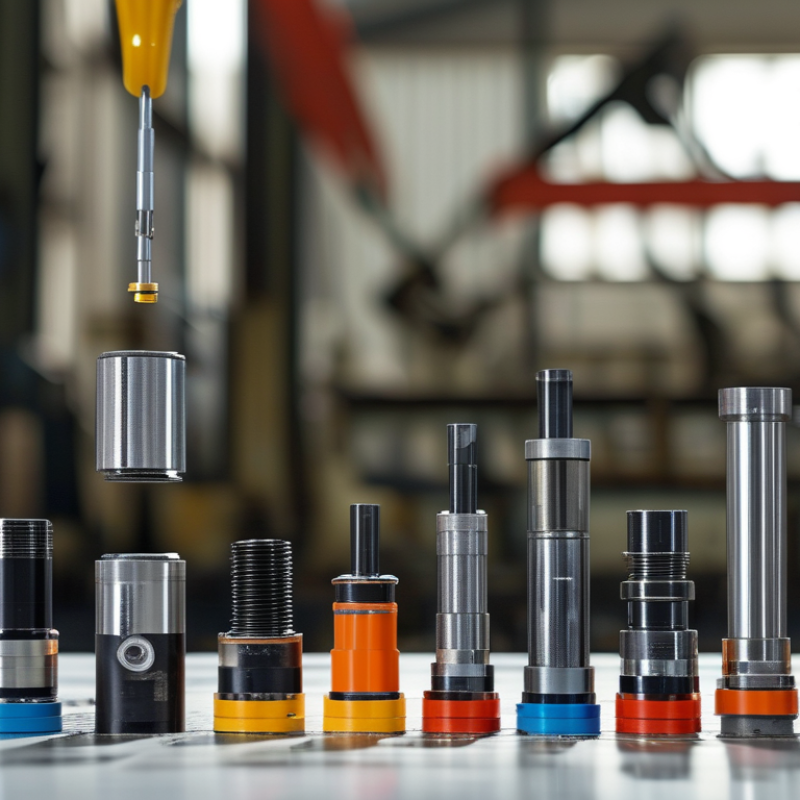
China’s hydraulic actuator seal manufacturers are judged by more than production capacity. Seal selection must match pressure, temperature, speed, fluid, and cylinder design. Common types include rod seals, piston seals, wipers, guide rings, O-rings, and V-packing. Each controls leakage differently.
ISO 6020/2 defines hydraulic cylinders with nominal pressures up to 160 bar. ISO 6022 covers designs reaching 250 bar. These figures matter during seal testing. A rod seal must resist extrusion during sudden pressure changes. A wiper must remove mud before the rod enters the cylinder. A guide ring limits side loading and protects the sealing surfaces. Small details matter.
Market research reports continue to identify construction equipment, factory automation, and mobile hydraulics as major demand areas. However, market growth does not prove seal reliability. Laboratory tests should measure leakage, friction, wear, compression set, and pressure cycling. Material compatibility also requires attention. Polyurethane suits many dynamic applications, while PTFE supports low friction and wider chemical resistance. Elastomers still need careful temperature control.
A perfect seal is an unrealistic target. Field failures often begin with poor rod finish, misalignment, contamination, or incorrect installation. Manufacturers should provide test conditions, batch traceability, and dimensional inspection records. Without that evidence, a “top” supplier remains only a marketing claim.
Evaluating China’s hydraulic actuator seal manufacturers requires more than comparing prices or browsing polished catalogs. Experience begins with proven work on excavators, presses, agricultural equipment, and custom cylinders. Ask for application records, seal material data, and failure analysis from real projects. Small details matter. A capable manufacturer should explain how pressure, temperature, speed, fluid type, and contamination affect seal life.
Professional evaluation should include compound testing, dimensional inspection, surface-finish control, and batch traceability. Request test reports for compression set, tensile strength, leakage, and wear resistance. Check whether inspection equipment is calibrated and whether production samples match approved drawings. Certifications can support credibility, but they do not replace technical evidence. Records matter. Consistent documentation also shows whether the factory controls suppliers and nonconforming parts.
Reliability becomes clearer through communication and after-sales behavior. Technical staff should review drawings carefully, question unclear tolerances, and suggest suitable profiles without overselling them. Sample lead time, replacement policy, packaging, and response speed deserve attention. A polished catalog is not proof. No supplier gets every decision right, and some test conditions may not reflect field contamination or sudden pressure changes. Buyers should compare factory audits, trial results, and long-term feedback before approving regular orders. That judgment takes time.
Profiles of the Top 10 Chinese Hydraulic Actuator Seal Manufacturers
This profile reviews ten leading Chinese manufacturers of hydraulic actuator seals. The selection considers production experience, material control, testing ability, and export reliability. It is not an absolute ranking. Market performance changes.
One manufacturer focuses on polyurethane rod seals for mobile machinery. Another develops NBR and FKM seals for high-temperature cylinders. A third supplies PTFE guide rings with bronze-filled compounds. Several companies produce wipers, piston seals, O-rings, and custom seal kits. Their workshops commonly use CNC lathes, automated trimming equipment, and dimensional inspection tools. Small details matter. A one-millimeter error can cause leakage.
Some manufacturers serve construction equipment, while others support presses, agricultural systems, or industrial automation. Reliable suppliers should provide compound data, hardness records, tolerance sheets, and sample testing. Look for batch identification on packaging. It supports traceability. I have seen attractive catalogs fail to explain compression set or shaft surface requirements. That weakness deserves attention. A low price may also hide inconsistent material mixing.
Buyers should compare actual test results rather than promises. Useful checks include pressure cycling, temperature exposure, wear resistance, and compatibility with hydraulic fluid. Production capacity matters during urgent orders, but quality control matters more. Factory visits can reveal storage conditions, mold maintenance, and inspection habits. The strongest profiles combine engineering support with honest limits. No supplier performs perfectly in every application. Conditions must be matched carefully.
| Rank | Profile ID | Primary Manufacturing Focus | Common Hydraulic Seal Products | Common Material Options | Typical Application Class | Customization Capability | Typical Industries | Quality Documentation |
|---|---|---|---|---|---|---|---|---|
| 1 | Manufacturer Profile 01 | High-volume molded and machined hydraulic sealing components | Rod seals, piston seals, wipers, guide rings and static seals | Polyurethane, NBR, FKM, PTFE compounds and reinforced thermoplastics | General mobile and industrial hydraulic actuators | Custom profiles, sizes and compound selection | Construction, agriculture and material handling | Material certificates and dimensional inspection reports commonly available |
| 2 | Manufacturer Profile 02 | Precision seals for heavy-duty hydraulic cylinders | Heavy-duty rod seals, piston seals, buffer seals and scrapers | High-performance polyurethane, PTFE blends, NBR and fabric-reinforced elastomers | High-load and high-cycle cylinder applications | Engineering support for pressure, speed and clearance requirements | Mining, metallurgy and heavy equipment | Inspection records and batch traceability subject to order requirements |
| 3 | Manufacturer Profile 03 | Standardized replacement seals and maintenance kits | Cylinder seal kits, rod seals, piston seals, O-rings and wear rings | NBR, polyurethane, PTFE, FKM and acetal-based guide materials | Aftermarket repair and scheduled maintenance | Metric and selected inch-size replacement programs | Repair workshops, distributors and fleet maintenance | Product drawings, packing lists and basic material data typically provided |
| 4 | Manufacturer Profile 04 | Custom-engineered seals for compact hydraulic actuators | Compact rod seals, low-friction piston seals, wipers and O-rings | Low-friction PTFE compounds, polyurethane, NBR and FKM | Compact cylinders with limited installation space | Profile development and small-to-medium production runs | Automation, robotics and agricultural machinery | Prototype measurements and product validation data available by project |
| 5 | Manufacturer Profile 05 | Seals designed for temperature and fluid compatibility | Rod seals, piston seals, static seals, wipers and bonded seals | FKM, hydrogenated NBR, PTFE compounds, NBR and polyurethane | Applications requiring broader temperature or fluid resistance | Compound selection based on fluid, temperature and pressure conditions | Energy equipment, industrial hydraulics and transportation | Material composition and compatibility information provided for qualified orders |
| 6 | Manufacturer Profile 06 | Large-diameter and oversized hydraulic cylinder seals | Large rod seals, piston seals, wipers, guide rings and flange seals | Polyurethane, PTFE, NBR, FKM and fabric-reinforced compounds | Large-bore cylinders and low-volume specialized equipment | Non-standard diameters, split designs and made-to-order tooling | Marine equipment, ports, steel plants and infrastructure | Dimensional inspection and tooling records normally linked to production orders |
| 7 | Manufacturer Profile 07 | Low-friction sealing systems for energy-efficient actuators | Low-friction rod seals, piston seals, guide rings and scrapers | PTFE-based compounds, polyurethane and engineered thermoplastics | High-speed or efficiency-focused hydraulic systems | Friction, leakage and service-life optimization support | Factory automation, injection molding and machine tools | Application test reports may be supplied for engineered projects |
| 8 | Manufacturer Profile 08 | Export-oriented hydraulic seal production and private-label supply | Seal kits, rod seals, piston seals, O-rings, wipers and wear rings | NBR, polyurethane, PTFE, FKM and common thermoplastic materials | Standard replacement and OEM supply programs | Packaging, labeling, drawings and order-based specifications | Distributors, aftermarket channels and general machinery | Commercial documentation and batch information supplied according to contract |
| 9 | Manufacturer Profile 09 | Sealing components for demanding mobile hydraulic equipment | Heavy-duty rod seals, piston seals, wipers, buffers and guide rings | Wear-resistant polyurethane, NBR, PTFE blends and reinforced materials | Shock loads, contamination exposure and outdoor service conditions | Seal geometry and material selection for harsh operating environments | Earthmoving, forestry, lifting and municipal equipment | Application drawings and incoming-material inspection records commonly used |
| 10 | Manufacturer Profile 10 | Flexible small-batch and prototype hydraulic seal manufacturing | Custom rod seals, piston seals, O-rings, wipers and static seals | Polyurethane, NBR, FKM, PTFE compounds and engineering plastics | Low-volume, non-standard and replacement applications | Reverse engineering, sample matching and rapid tooling support | Special-purpose machinery, maintenance and equipment refurbishment | Sample approval, dimensional reports and inspection records available by agreement |
| Note: The profiles are anonymized and describe publicly common product capabilities in the Chinese hydraulic-seal manufacturing sector. Actual pressure, temperature, service-life, certification and export data should be verified directly with each qualified supplier before purchase. | ||||||||
China Top 10 Hydraulic Actuator Seal Manufacturers?
Materials, Manufacturing Technologies, Certifications, and Applications
Selecting China’s top ten hydraulic actuator seal manufacturers requires more than comparing prices. Grand View Research estimates that the global hydraulic seals market will continue expanding through 2030, driven by construction, agriculture, and industrial automation. That growth increases demand for reliable sealing materials. Common choices include polyurethane for abrasion resistance, nitrile rubber for general hydraulic oils, and FKM for higher temperatures. PTFE remains valuable where low friction matters. Material data must match pressure, temperature, fluid chemistry, and sliding speed.
Manufacturing quality is equally important. Leading factories commonly use CNC turning, injection molding, precision grinding, and automated inspection. Modern production lines can measure lip geometry within micrometer-level tolerances. Some facilities use finite element analysis to predict deformation under pressure. Useful evidence includes batch traceability, hardness records, dimensional reports, and leakage-test results. ISO 9001 certification supports process control, while ISO 14001 indicates environmental management. For automotive applications, IATF 16949 can provide stronger supplier discipline. Certification alone is not proof of seal performance.
Applications vary sharply. Excavators need abrasion resistance under dusty, shock-loaded conditions. Hydraulic presses require stable sealing during repeated high-pressure cycles. Mobile equipment often needs seals that tolerate temperature changes and contaminated oil. MarketsandMarkets reports that construction equipment remains a major hydraulic-system application area. Still, supplier rankings can be imperfect. A factory may excel at rod seals but struggle with custom piston profiles. Buyers should request application samples, pressure-cycle results, and independent inspection before approving production. Small details matter.
A top-ten list is only a starting point. Choosing the right Chinese hydraulic actuator seal manufacturer requires evidence, not attractive catalog photos. Grand View Research reported that the global hydraulic seals market reached about USD 3.3 billion in 2023. This growth increases supplier options, but also makes quality screening more important.
Check whether the manufacturer follows ISO 9001 procedures and tests dimensions against ISO 3601 where applicable. Request material certificates, batch numbers, hardness records, and compression-set results. For polyurethane seals, ask about temperature limits, fluid compatibility, and extrusion resistance. Test it cold. A seal that performs well at room temperature may crack during winter commissioning. Request samples from the same production line used for mass orders. Inspect the sealing lip under magnification, especially around the mold parting line.
Audit production capability through video evidence or an independent inspection. Confirm mold ownership, traceability, and the ability to repeat critical dimensions. A reliable supplier should explain its test pressure, cycle count, and failure criteria clearly. Vague claims deserve caution. One practical mistake is judging suppliers only by price and response speed. I still recheck this point because a low unit cost can hide frequent replacements, machine downtime, and emergency freight. Ask for a corrective-action report from a previous failure. It reveals more than a polished presentation. Also compare lead times for standard and customized profiles, because tooling delays can disrupt actuator assembly.
: Common types include rod seals, piston seals, wipers, guide rings, O-rings, and V-packing. Each type controls leakage differently. A wiper removes mud from the rod before entry. A guide ring limits side loading inside the cylinder.
Match the seal with pressure, temperature, speed, fluid, and cylinder design. Polyurethane often suits dynamic applications. PTFE can provide low friction and broader chemical resistance. Elastomers still require careful temperature control.
Some cylinder designs use nominal pressures up to 160 bar. Other designs may reach 250 bar. Rod seals must resist extrusion during sudden pressure changes. Testing should reflect real operating pressure.
Useful tests measure leakage, friction, wear, compression set, and pressure cycling. Temperature exposure is also important. Fluid compatibility needs direct verification. Room-temperature success proves little.
Request material certificates, hardness records, dimensional inspection results, and batch numbers. Ask for test pressure, cycle count, and failure criteria. Packaging should show clear batch identification. Traceability matters during failures.
Request samples from the same production line used for larger orders. Inspect the sealing lip under magnification. Check the mold parting line for defects. A one-millimeter error can cause leakage.
Poor rod finish, misalignment, contamination, and incorrect installation often begin failures. Incorrect storage may also damage sealing materials. A wiper cannot correct a badly finished rod. That point is easy to underestimate.
Compare actual test results, material data, lead times, and corrective-action reports. Check standard and custom tooling delays. Factory inspections can reveal storage and mold-maintenance problems. I would still recheck every claim.
This article provides a practical overview of Hydraulic Actuator Seals, explaining their main types, functions, sealing mechanisms, and performance requirements in demanding hydraulic systems. It examines how these seals support pressure control, prevent fluid leakage, reduce friction, and improve actuator reliability under varying temperatures, pressures, speeds, and operating environments. The article also outlines the key criteria used to evaluate Chinese manufacturers, including material selection, product consistency, engineering capabilities, quality control, testing procedures, certifications, production capacity, and application experience.
It then presents profiles of ten leading Chinese manufacturers without focusing on brand promotion, highlighting their general strengths in materials, manufacturing technologies, customization, and industrial applications. The final section offers practical guidance for selecting a suitable supplier by comparing technical specifications, durability, compatibility, delivery capability, quality assurance, communication, and after-sales support. This summary helps buyers better understand the market and make informed decisions when sourcing reliable seals for construction machinery, industrial equipment, automotive systems, and other hydraulic applications.

Kelong New Materials